


A wire harness connector is the plug, socket, terminal or block that joins the wires of a harness to a device, a circuit board or another harness. The right connector depends on the wire gauge, the voltage and current rating, the number of circuits and the environment, such as moisture, heat and vibration. The table below summarizes the eight connector types covered in this guide.
| Connector type | How it connects | Typical uses |
|---|---|---|
| Plug-and-socket | A male plug mates with a female socket and can be disconnected | Consumer electronics, modular equipment |
| Terminal blocks | Wires are clamped into a modular block | HVAC controls, industrial control panels |
| Binding posts | The conductor is clamped under a screw post | Amplifiers, loudspeakers |
| PCB connectors | Wires (wire-to-board) or boards (board-to-board) mate to a header on a PCB | Compact electronics such as phones and laptops |
| Rack and panel | A connector fixed on a panel mates with one on a rack | Telecom equipment, printers |
| Circular | A round shell, often built to resist dust, moisture and heat | Outdoor power tools, agricultural and construction machinery |
| Blade | A flat blade slides into a receptacle | Automotive and electronic devices |
| Ring and spade | A crimped or soldered terminal is fixed under a screw | Ground and point-to-point connections |
Below, each type is explained in more detail, followed by selection factors, design trends, common connector problems and what to send when you order a harness.
What is a Wire Harness Connector?
Wire harness connectors are devices designed to join electrical wires, cables, or circuits, ensuring stable and secure electrical connections within a wiring system.
Connectors play a vital role in maintaining the reliability and efficiency of electrical systems by facilitating seamless power transmission and signal flow while minimizing failures or interruptions. Connectors are supposed to ensure optimal performance and reliability across the whole system, whether for high-current capacity, signal integrity, or durability under harsh conditions.
Their design materials, features, and configurations enable the smooth functioning of complex electronic systems ranging from consumer electronics to industrial machinery and automotive wiring.
The component of wire harness connectors
Wire harness connectors have two core components.
- Housing: This component houses the terminals and provides an insulating case that protects the terminals from bridging and corrosion and ensures stability. They are primarily insulators.
- Terminals: These components are responsible for signal transfer. Technically, they are the pins you see in a connector, and their makeup is of metals with high electrical properties for conduction.
Types of Wire Harness Connectors
Wire harness connectors are available in various types and sizes, each designed to meet specific application needs based on environmental, electrical, and mechanical requirements.
Plug-and-Socket Connectors
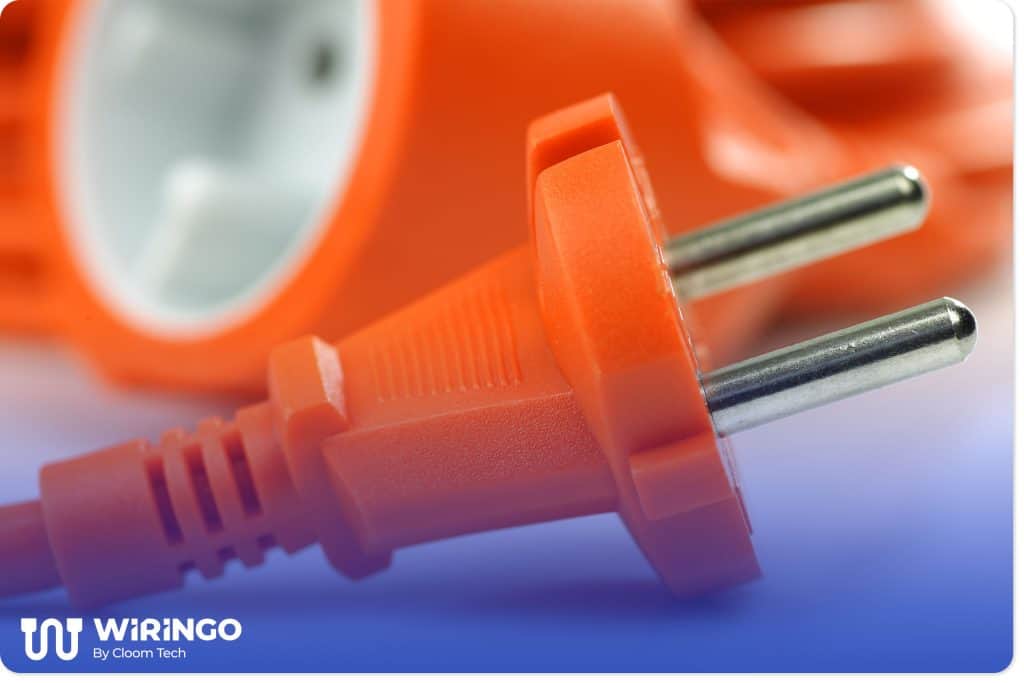
Plug-and-socket connectors consist of a male plug and a corresponding female socket, ensuring a secure yet easily detachable connection.
Their adaptability and ease of use make them popular across various industries, especially in consumer electronics, where devices often involve modular components that need convenient disconnection.
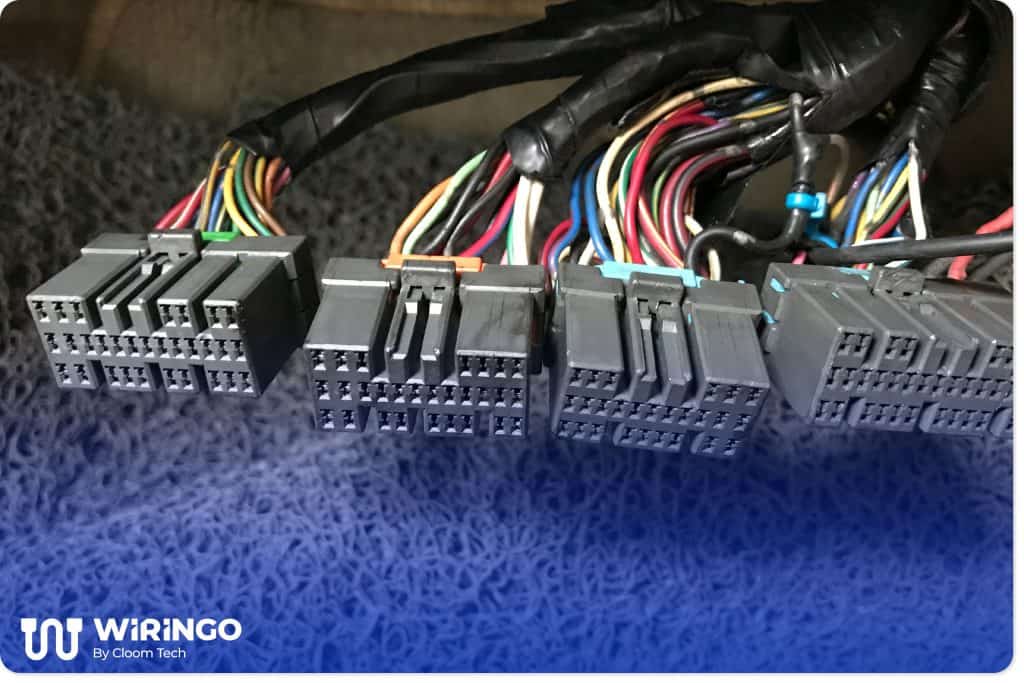
Terminal Blocks
Terminal blocks are modular connectors that provide an efficient and organized way to join wires in an electrical system.
These connectors are commonly used in HVAC systems to manage connections between control units, sensors, and power supplies or industrial control panels to improve system organization, simplify troubleshooting, and ensure safety in complex wiring setups.
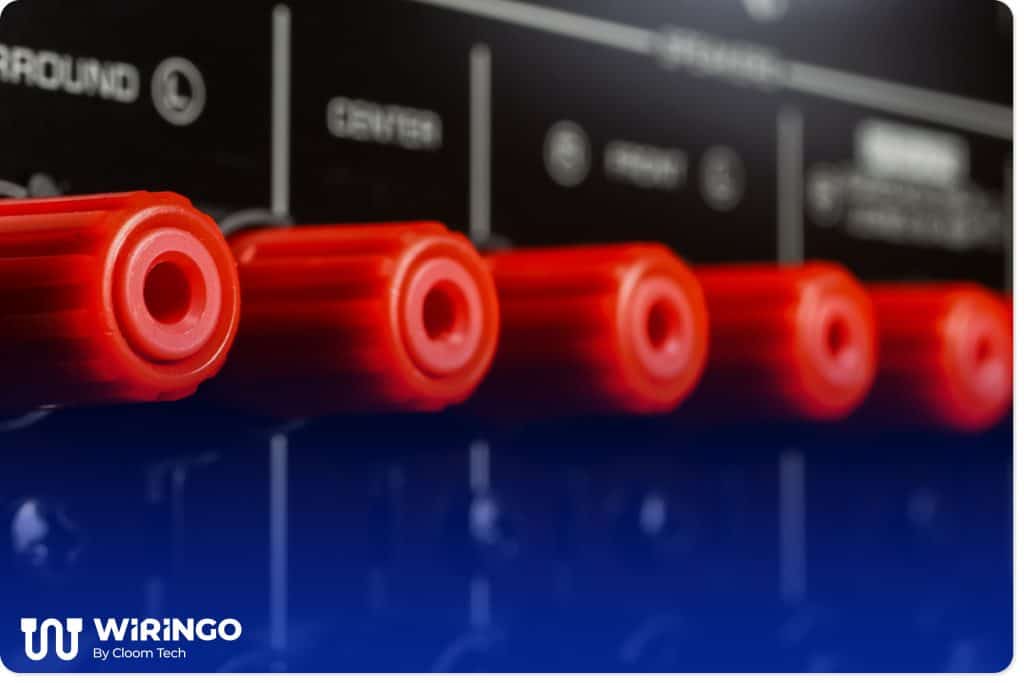
Binding Post Connectors
These connectors are like screws that terminate a conductor. Also, they function to clamp wires to posts temporally. You can see their applications in some audio gadgets like amplifiers and loudspeakers.
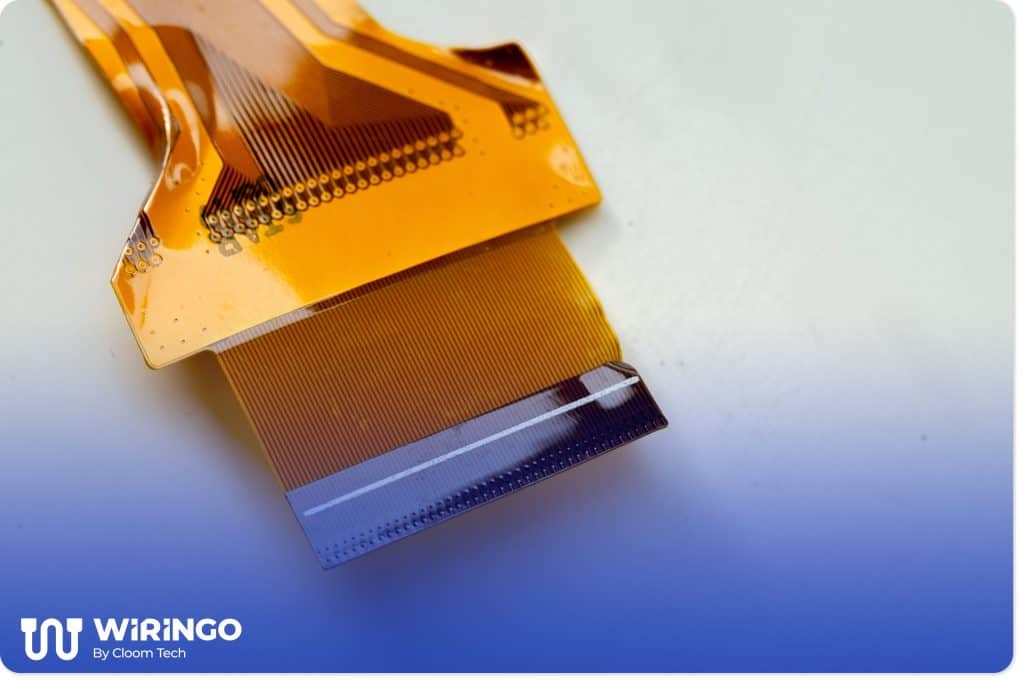
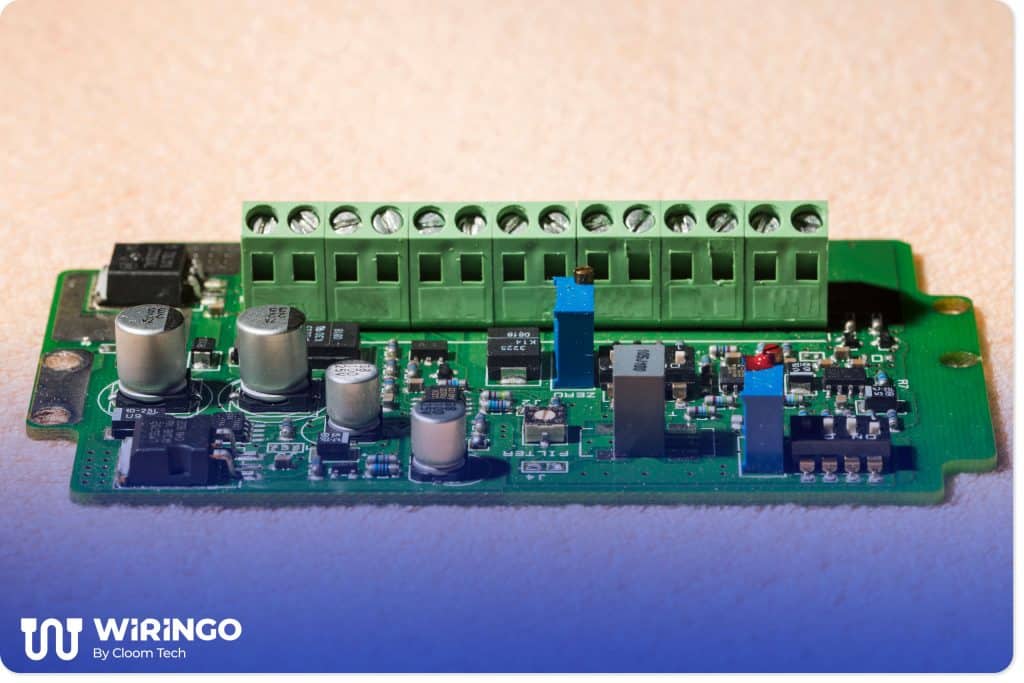
PCB Connectors
PCB (Printed Circuit Board) connectors are essential components that allow efficient signal transmission and power distribution within compact electronic systems, offering an excellent space-saving solution for modern, high-density designs.
PCB connectors come in several categories, including:
- Board-to-Board Connectors – directly connect two PCBs to enable signal transfer without additional wiring.
- Wire-to-Board Connectors – link external wires to a PCB to facilitate connections with other components in the system.
Examples of applications include consumer electronics like smartphones and laptops, where compact designs are important.
Rack and Panel Connectors
Unlike other connectors, the Rack and Panel connectors are adjustable and suitable for stationary devices. They have types based on their connection. Examples include a cable to the panel, a rope to the line, and a rack to the board. Their application areas include telecommunications (e.g., server room connection), printers, and more.
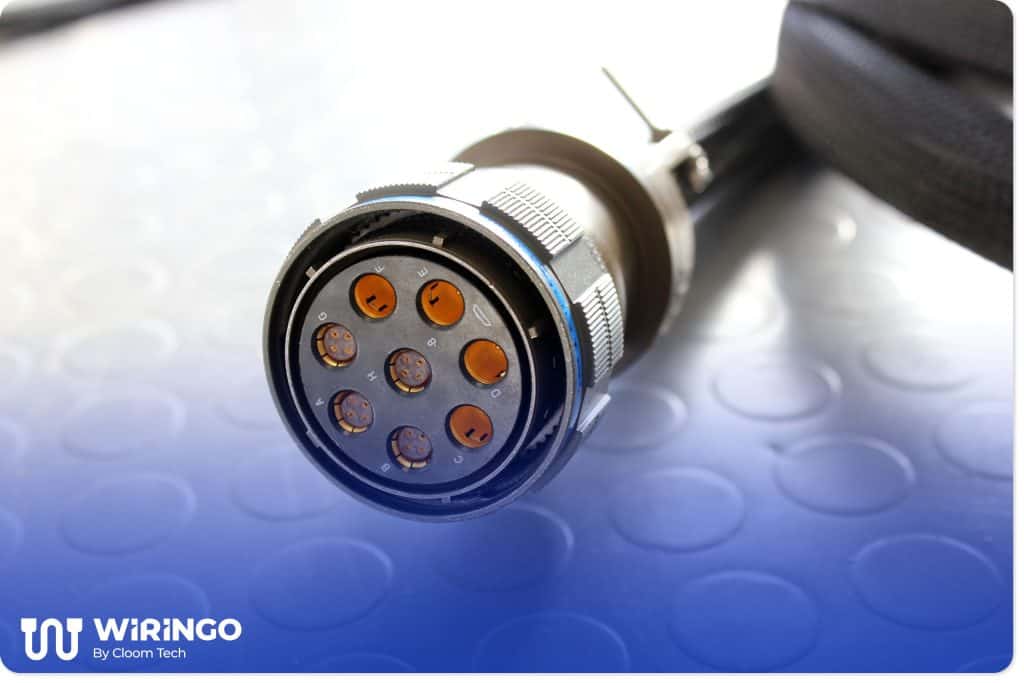
Circular Connectors
Circular connectors have a round shell, and many series are sealed against dust and water. The protection depends on the specific series and its rating, so check the datasheet.
They are common in equipment used outdoors. Examples include portable power tools and machinery used in agriculture or construction.
Blade Connectors
Blade connectors are like plug-and-socket connectors, with flat conductive blades connecting wires to a receptacle. Applications include automobiles and some electronic devices.
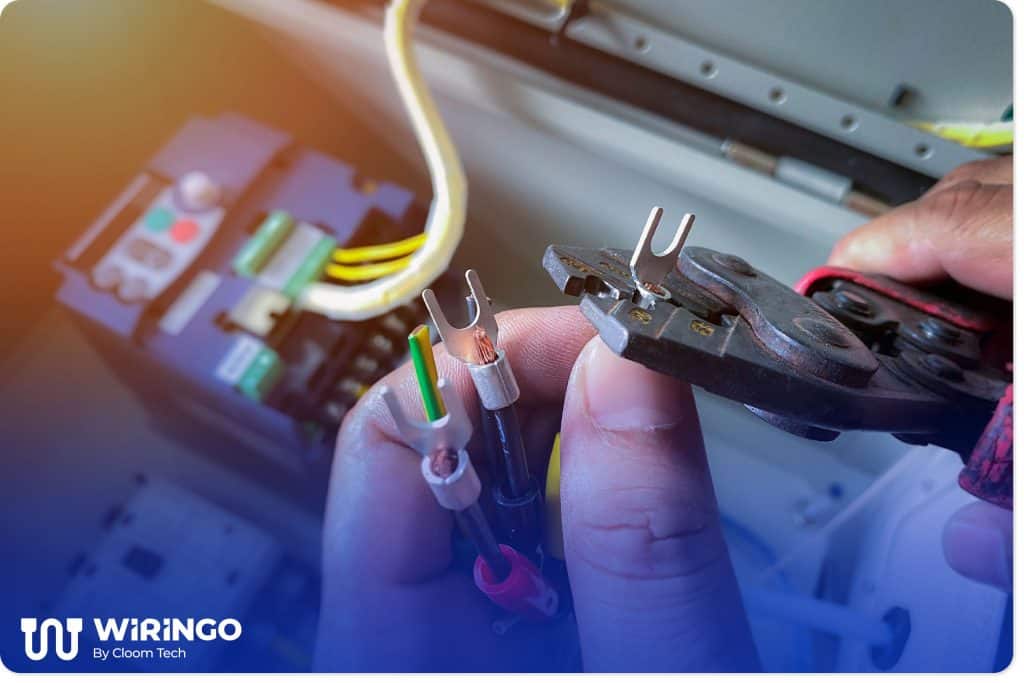
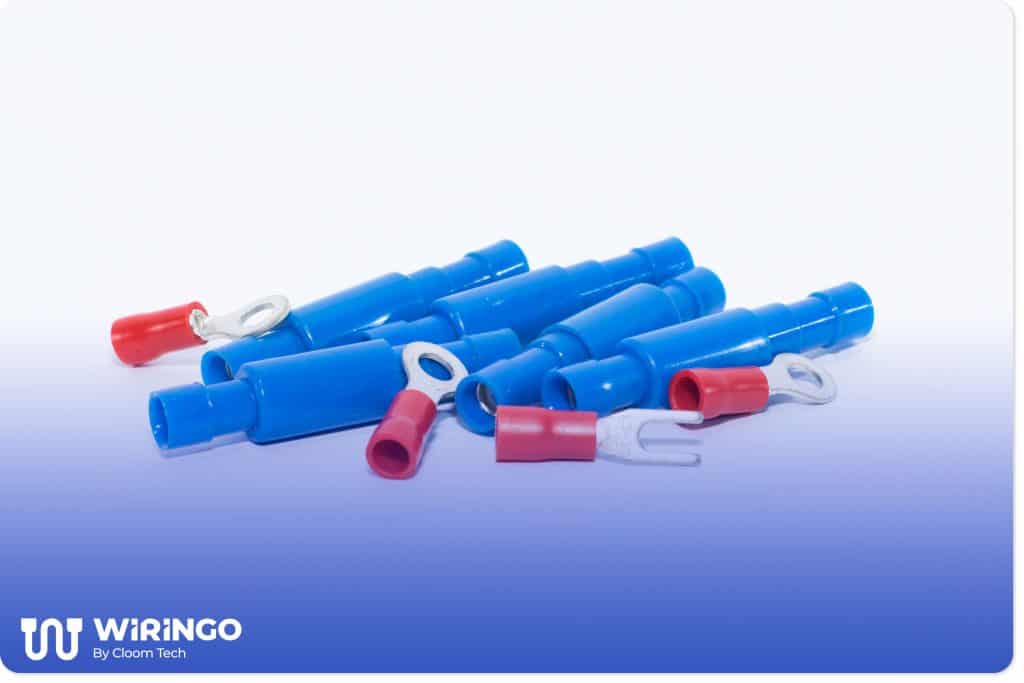
Ring and Spade
Ring and Spade could be small in size but help ensure a firm connection. They are put in a post and screwed together to ensure harmony. They come insulated or exposed, depending on the one you need for your project. Furthermore, you attach the conductor to the connector by crimping or soldering it together.
Most often, ring and spade connectors are helpful for ground or earth connections. The connection here is also seamless and applicable to areas with a point-to-point link.
Selection Factors for Wiring Harness Manufacturers
When choosing wire harness connectors, manufacturers carefully consider several key factors to ensure optimal performance and compatibility with their systems.
Technical requirements of your wiring harness
When choosing connectors, it’s important to prioritize electrical, safety, mechanical, and environmental parameters. Key considerations include:
- Wire Gauge Compatibility – connectors must match the specific wire sizes they are designed for. Using the wrong wire gauge could result in loose or unreliable connections.
- Voltage and Current Ratings – choosing a connector with ratings that exceed the system’s requirements ensures optimal performance and minimizes risks of failure or overheating.
- Circuit Density and Size – keep in mind the number of contact pairs you need and ensure the connector size and total separating force align with the demands of the circuit.
- Data Transmission Speed – choose connectors that support high-speed signal transmission without degradation or interference.
- Size and Weight – the connector should fit within the design constraints of the product while remaining as lightweight as possible.
- Durability: evaluate environmental factors such as moisture, temperature fluctuations, and vibration. Ensure the connectors meet IP67 or IP68 protection standards for environments requiring waterproofing.
Demands for your wiring harness termination
Termination methods refer to the connection method of connecting the contact pairs of the connector with the wire or cable. Choosing the correct termination method and using the right termination technology are also essential aspects of using and selecting connectors.
- Twist-on connectors are commonly used in residential wiring for their simplicity and reliability.
- Crimp-on connectors are often used in industrial and automotive applications due to their firm, vibration-resistant connections.
- Push-in connectors use a spring mechanism to secure wires, making them ideal for quick and straightforward installations.
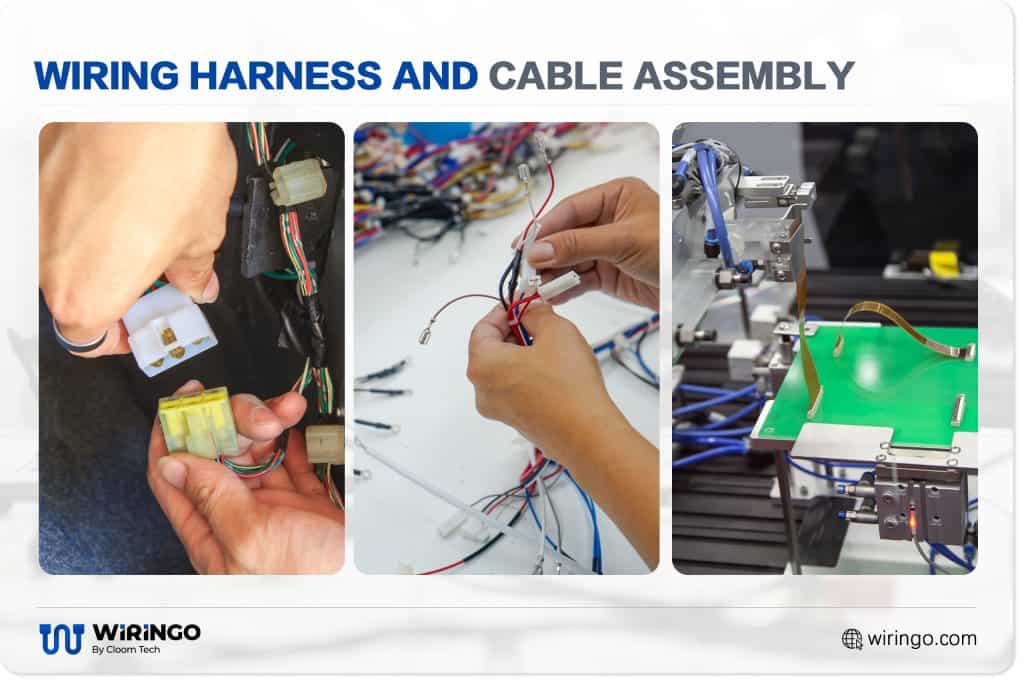
Balancing Cable Assembly Types and Quality
When building a wiring harness, you must choose receptacles and mating connectors to make the required connections.
- Point-to-Point Cable Bundles create a direct interconnect topology commonly used for straightforward, one-to-one wiring solutions.
- Bifurcated Cables – a more complex wiring harness setup that allows connectors and receptacles to be mixed and matched across multiple boards.
- Flex ribbons – facilitate using edge connectors, surface-mount connectors, and through-hole connectors to interface with multiple PCBs.
Industry-Specific Applications
Wire harness connectors are critical components across various industries, with specific types designed to meet specific requirements.
- Automotive – heat-resistant and weatherproof connectors ensure reliability in harsh environments, such as external lighting systems or engine compartments.
- Robotics – flexible and lightweight connectors accommodate compact designs and high-mobility systems.
- Industrial – durable connectors with quick assembly and maintenance features, like terminal blocks, facilitate efficient system updates and repairs.
- Consumer Electronics – compact PCB connectors are used in devices like smartphones and gaming consoles to save space and enable high-speed data transfer.
- Healthcare Equipment – secure wire harness connectors are used in medical devices like diagnostic machines and surgical tools, that require reliability and minimal interference.
Trends Shaping Wire Harness Connector Design
Innovative trends in wire harness connector design are reshaping the industry to meet the demands of modern applications.
Miniaturization for Compact Systems
The trend toward miniaturization is driving the development of more miniature connectors that maintain high performance and reliability. Compact connectors are essential for electronics, medical devices, and other applications where space is limited, ensuring functionality without compromising durability or efficiency.
Sustainable Materials
Some buyers now ask for connectors and materials that meet environmental rules such as RoHS, or that use recyclable materials. If you need this, state it on your drawing.
Smart Feature Integrations
Modern connectors are now incorporating advanced technologies, such as:
- Fiber-optic connectors – for high-speed and high-bandwidth data transmission.
- High-speed interfaces – that cater to the demands of fast and reliable communication.
- Smart connectors – with integrated sensors or IoT compatibility, enabling real-time monitoring, diagnostics, and predictive maintenance.
Common Wire Harness Connector Issues
If you don’t prepare for these errors at the design stage, you might waste resources after production.
Contacts
Contacts are tiny metals in a connector that carry electric current. The issue with contacts is that they can become corroded if not designed well. Hence, this can affect the current transfer.
Another issue with contacts is their mating cycle. Because connectors can often undergo a series of disconnections and reconnections, their grip is prone to become loose. Hence, while deciding on a connector, consider a high mating cycle, especially when your wire harness is in an area of frequent mating.
Crimping
The issues with crimping connectors to wire harnesses are more human or machine error. This error may lead to failure to crimp the connectors correctly. This can result in loose connection, moisture build-up, and eventually short-circuiting. For these reasons, you should use the right crimp tools and techniques to crimp connectors.
Strain Relief
Strain relief stops pulling or bending forces on the wire from reaching the terminals inside the connector. It can be a connector backshell or clamp, a boot, an overmold, or a tie-down point near the connector. Leave some slack in the wire length so the harness can move without pulling on the connector. Specify the strain relief on your drawing.
Over-molding
Another error with the wire harness connector is over-molding. Overmolding goes a long way in determining how long it will last, depending on the over-molding material. The choice of materials for over-molding depends on the application’s environmental factors and mechanical demands.
What to Send When Ordering a Wire Harness with Connectors
When you buy a finished harness rather than loose connectors, the quote depends on the exact parts. Send us:
- A drawing that shows each circuit (a hand-drawn drawing is fine)
- The connector housing and terminal part numbers for each end
- If you are replacing an existing connector: the part number molded or printed on it, the pin count, the keying and the part number of the mating connector
- Any sealing requirement, such as a waterproof connector
- The wire gauge, color and length for each circuit
- The wire brand and type, if you need a specific one; we follow it strictly
- The quantity and your target delivery date
Our standard checks are a visual inspection, including terminal crimp condition, a pull test and a continuity test. Any other test is agreed with you before production. We quote simple harnesses within 24 hours and complex harnesses within 3 business days. For the full list, see our wire harness quote checklist.
Ensure Reliable Wire Harness Connections with Wiringo
Choosing the right wire harness connector is important to maintaining reliable, efficient system performance across various industries.
Wiringo builds wire harnesses to your drawing with the connectors you specify, and we can help review the drawing before production. Send your drawing and connector part numbers to get a quote.